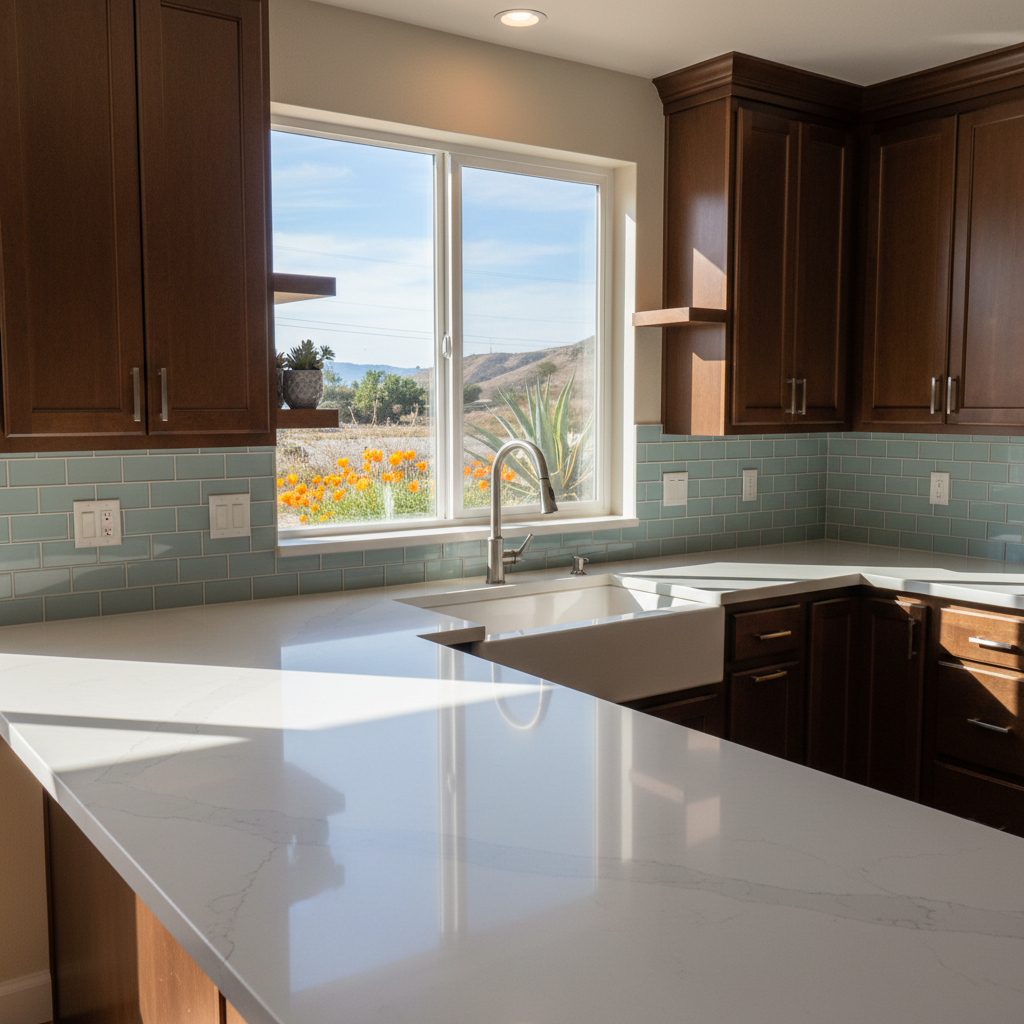
You're ready for new countertops, right? It's a big decision, and you want it done right. But here in Fullerton, just like with any major home improvement, the weather and seasons actually play a pretty important role in how smoothly your countertop installation goes and how well those new surfaces hold up over time. It's not just about picking the right slab; it's about picking the right time, too.
When's the Best Time for Countertop Installation?
Honestly, you can install countertops any time of year. But if you're looking for the easiest time, I'd lean towards spring or fall. Why? Well, think about our weather. Those extreme heat waves we get in August and September? They're not ideal. And while our winters are mild, a surprise cold snap or a week of rain can throw a wrench in things.
Spring (March-May) and fall (October-November) usually bring us those nice, temperate days. Not too hot, not too cold. This is good for a few reasons:
- Comfort for the Crew: Believe it or not, it makes a difference. Moving heavy slabs of quartz or granite in 100-degree heat is tough. Safer for everyone when it's cooler.
- Material Acclimation: While most modern countertop materials are pretty stable, extreme temperature swings aren't their best friend. Letting them acclimate in moderate conditions can help.
- Less Dust & Debris: If we're cutting anything on-site (though we try to do most of that off-site), having windows open for ventilation without battling extreme temperatures or heavy winds is a plus.
That said, we've installed countertops in every month of the year. It just means we take extra precautions during the more extreme seasons.
How Fullerton's Climate Affects Your Countertops
Our Southern California climate is pretty great, but it's not without its quirks. We get a lot of sun, and sometimes, that dry heat can be intense. Here's what I've seen over the years:
- Heat and UV Exposure: If your kitchen gets a lot of direct sunlight, especially through a large window, those UV rays can affect certain materials over time. Natural stones like granite are pretty resilient, but some engineered quartz or laminate options might show fading or discoloration if constantly baked by the sun. We're talking years, not months, but it's something to consider.
- Humidity Swings: While we don't have super high humidity like Florida, we do get our dry spells and then occasional rain. Wood butcher block countertops, for example, are more susceptible to expanding and contracting with humidity changes. That's why proper sealing and conditioning are crucial for them.
- Indoor Climate Control: This is a big one. Most homes in Fullerton have AC. Keeping your indoor temperature relatively stable year-round helps all your home's finishes, including your countertops. Wild temperature swings inside can stress materials.
When we're talking about a kitchen remodel, especially with Absolute Kitchen Remodelers, we're always thinking about these things. We'll discuss the best materials for your specific kitchen layout and sun exposure during the planning stages.
Protecting Your Investment Year-Round
Once those beautiful new countertops are in, you want them to last, right? Here are some simple, year-round tips:
- Clean Spills Immediately: This is a no-brainer. Acidic liquids (lemon juice, vinegar, wine) are especially bad for natural stone if left to sit.
- Use Trivets and Hot Pads: Don't put hot pots directly on your countertops, especially with quartz or laminate. Even granite can be damaged by extreme thermal shock.
- Cutting Boards are Your Friends: Knives can scratch almost any surface. Protect your investment and your knives by always using a cutting board.
- Seal Natural Stone Regularly: If you've got granite, marble, or other natural stone, it needs periodic sealing. How often depends on the stone and how much use it gets, but usually every 1-3 years. It's an easy DIY job, or we can guide you.
- Mind the Sun: If you have a sunny spot, consider blinds or curtains during the hottest parts of the day to reduce direct UV exposure, especially if you have a material known to be sensitive.
- Use the Right Cleaners: Stick to pH-neutral cleaners. Harsh chemicals can strip sealants or damage the surface of certain materials. A little warm water and mild dish soap usually do the trick for daily cleaning.
Taking care of your countertops isn't rocket science, but a little consistent effort goes a long way. You've invested in your home, and with these tips, those new surfaces will look fantastic for years to come.